
Brightening Your Beauty: Top Topical Agents for a Radiant Skin
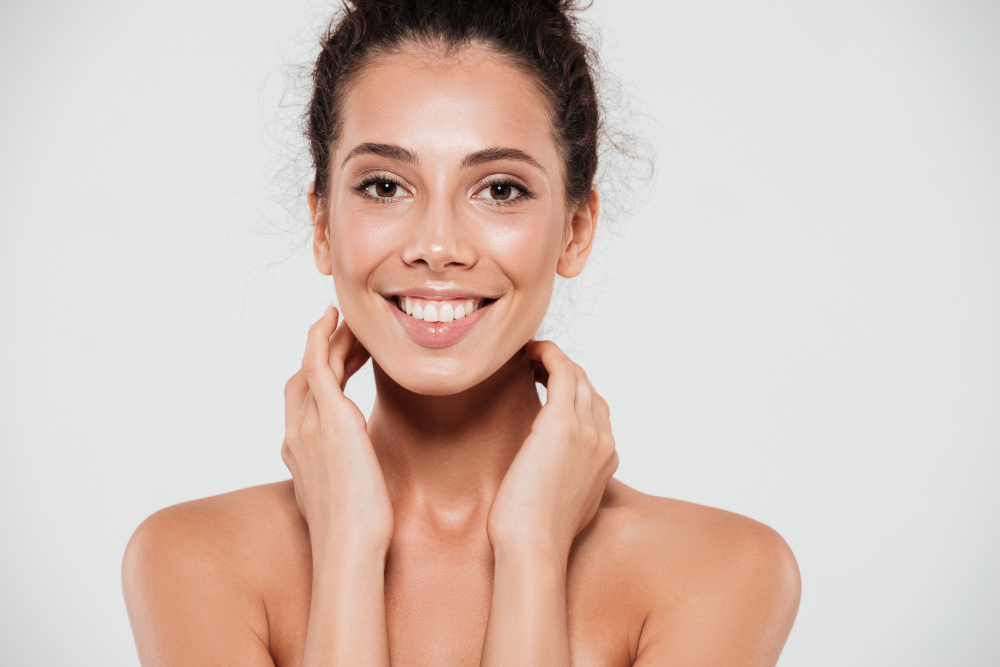
Hyperpigmentation, sun damage, and age spots can leave complexions looking dull and uneven. Luckily, there’s a whole world of topical agents available to target these concerns and brightenyour natural beauty.
Here, we’ll explore some of the most popular and scientifically-backed ingredients for achieving a radiant complexion:
Vitamin C: This powerhouse antioxidant [1] is a superstar for brightening. It comes in various forms, each with its own benefits:
- Ascorbic Acid: The purest form, but also the most unstable and potentially irritating.
- Magnesium Ascorbyl Phosphate (MAP): A more stable and gentler form of Vitamin C.
- Tetrahexyldecyl Ascorbate: A fat-soluble form that may penetrate the skin more deeply.
- Ascorbyl Glucoside: A water-soluble form that converts to Ascorbic Acid on the skin.
- Sodium Ascorbyl Phosphate: A stable form that may offer some brightening benefits.
Glabridin: Derived from licorice root, Glabridin helps reduce melanin production, which can lighten dark spots [2].
Potassium Azeloyl Diglycinate: This ingredient helps diminish hyperpigmentation and may be suitable for sensitive skin [3].
Niacinamide (Vitamin B3): A multi-tasking wonder, Niacinamide fades hyperpigmentation, reduces redness, and improves overall skin texture [4].
Hydroquinone: This highly effective lightening agent requires a prescription and should be used under the supervision of a facial plastic specialist [5].
Azelaic Acid: A naturally occurring acid with antibacterial properties, Azelaic Acid brightens skin and reduces inflammation [6].
Adapalene (Differin): A retinoid medication, Adapalene increases cell turnover and fades hyperpigmentation, but requires a prescription [8].

Choosing the Right Brightening Agent
With so many options, selecting the best brightening agent for your unique skin can feel overwhelming. Here’s what to consider:
- Skin Type: Sensitive skin may benefit from gentler ingredients like MAP or Niacinamide, while oily skin might tolerate Ascorbic Acid.
- Severity of Hyperpigmentation: For stubborn dark spots, a combination of ingredients or a prescription medication might be necessary.
- Sun Sensitivity: Certain ingredients like Hydroquinone and Retinoids increase sun sensitivity, so diligent sunscreen use is crucial.
Advanced Aesthetics Center Can Help
At Advanced Aesthetics Center, we believe in personalized skincare solutions. To create a customized brightening regimen and achieve your desired results, consult with our board-certified facial plastic surgeon, Dr. George Sun. He will assess your skin, discuss your goals, and recommend the most effective and safe brightening agents for you.
Citations
- Tsao, Hsin-Pin et al. “Vitamin C and Melasma: From Antioxidant to Antipigmenting Agent.” Dermato-endocrinology vol. 4,3 (2012): 323-334.
- Kim, Young‐Min et al. “Whitening Effect of Topical Licorice Extract Containing Glabridin on Human Melanocytes.” International journal of dermatology vol. 46,8 (2007): 809-813.
- Kim, Kyung Eun et al. “Potassium Azeloyl Diglycinate Inhibits Melanogenesis by Down-Regulating MITF and M36 Cascade in Melanocytes.” International journal of molecular sciences vol. 16,12 (2015): 28972-28984.
- Ghadially, Rashmi et al. “The Role of Nicotinamide in the Treatment of Acne.” The Journal of clinical and aesthetic dermatology vol. 8,5 (2015): 20-23.
- Stransky, Nancy S., and Robin Ashcraft. “Hydroquinone.” Clinics in dermatology, vol. 28, no. 1, 2010, pp. 10–13.https://www.ncbi.nlm.nih.gov/books/NBK539693/
- Del Rosso, Joseph Q., et al. “Azelaic Acid.” Journal of the American Academy of Dermatology, vol. 62, no. 6, 2010, pp. 1073–1083.https://pubmed.ncbi.nlm.nih.gov/8654129/
- Leyden, James J., et al. “Comparative Efficacy and Safety of Adapalene 0.1% Cream and Tretinoin 0.05% Cream for the Treatment of Acne Vulgaris.” Archives of dermatology, vol. 132, no. 1, 1996, pp. 15–19.